



Office-to-Residential Conversions Drive Spain’s Real Estate Market: Over 1 Million sqm Repositioned in One Year
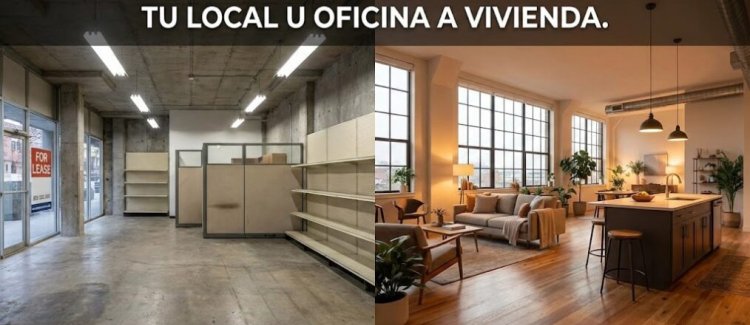
Office-to-Residential Conversions Drive Spain’s Real Estate Market: Over 1 Million sqm Repositioned in One Year
Spain’s real estate sector is undergoing a profound transformation, led by a structural shift: the conversion of underused office space into residential housing. This trend, fueled by strong housing demand and evolving work patterns, is emerging as one of the market’s key growth drivers.
According to Pere Viñolas, Chief Executive Officer of Inmobiliaria Colonial, “more than one million square meters of office space have been converted into residential use over the past year.” This figure highlights the scale of the shift, particularly in major cities where remote work has reduced demand for traditional office space and accelerated asset repositioning.
Residential boom: new opportunities for investors and developers
The change of use is not only addressing a pressing social need—access to housing—but also unlocking new investment opportunities. In this context, Viñolas emphasized the growing role of family offices, describing them as “very positive” investors thanks to their long-term outlook and flexibility in adapting to new market trends.
At the same time, Ismael Clemente, CEO of Merlin Properties, pointed to the “significant pressure” in the office market driven by this residential shift. According to Clemente, many companies are leaving premium CBD locations due to high rental costs, accelerating the conversion of these assets into housing.
Office segment remains stable despite transition
Despite these changes, the office sector continues to show solid fundamentals. Clemente noted that tenant affordability ratios remain low—around 4%—a healthy level that suggests stability in the short to medium term. “Issues typically arise once figures reach double digits,” he added, reinforcing the segment’s resilience for certain corporate occupiers.
Retail rebounds with record occupancy and rents
The retail segment is also showing strong recovery after the pandemic downturn. Miguel Pereda, Chairman and CEO of Grupo Lar, stated that the sector has “moved past the desert created by COVID” and is now achieving record occupancy levels and rental growth.
Meanwhile, Adolfo Ramírez-Escudero, representing CBRE, emphasized that real estate investment remains fundamentally driven by supply and demand dynamics. However, he warned that potential interest rate increases could dampen investment activity across the sector.
Data centers: high potential, significant barriers
Another key topic discussed was the development of data centers in Spain—an increasingly strategic asset class. However, Clemente identified four major challenges: limited technological expertise, high capital requirements, investor uncertainty, and, most critically, regulatory and administrative hurdles.
Among the main constraints are restricted access to energy and slow urban planning processes, both of which are delaying high-potential projects. “Spain could become a leading hub for data centers and artificial intelligence,” he noted, “but regulatory inefficiencies are holding back this opportunity.”
Conclusion: a sector in continuous reinvention
The conversion of office space into residential use is not a temporary trend but a structural response to new economic and social dynamics. For developers, investors, and real estate agencies, understanding this shift is essential to identifying opportunities and staying competitive in an increasingly residential-focused market.
In this evolving landscape, asset flexibility, land-use innovation, and public-private collaboration will be key to addressing Spain’s growing housing demand.
CATEGORIES
LATEST NEWS


 Contact us