



European Construction Sector Set to Rebound Strongly Between 2026 and 2028, According to Bain & Company
European Construction Sector Set to Rebound Strongly Between 2026 and 2028, According to Bain & Company
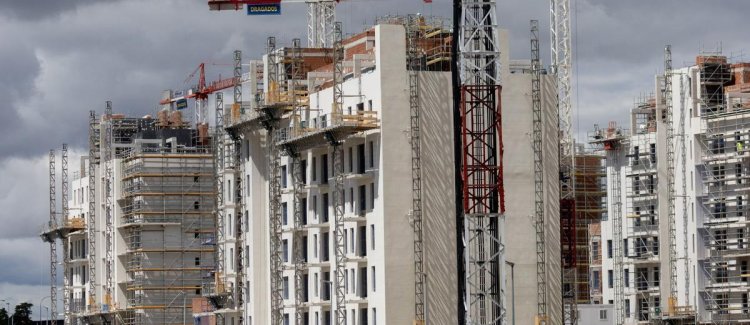
The European construction sector is preparing for a new cycle of sustained growth between 2026 and 2028, driven by a more stable economic environment and renewed activity across key national markets. This outlook is detailed in the latest Bain & Company industry report, which anticipates a positive medium-term trend after several years of uncertainty.
Resilient infrastructure and new residential developments: the engines of recovery
According to Bain, growth in resilient infrastructure, the reactivation of new residential construction, and a gradual increase in office building projects will fuel the long-awaited recovery of construction activity across Europe.
In Spain, projected growth remains solid, with a 3% CAGR between 2024 and 2027, compared to 4% during 2021–2024.
“After challenging years, the European construction market will return to growth between 2026 and 2028, with early momentum already visible. Spain follows this European trend, supported by pent-up housing demand, renewed residential development and the positive impact of ECB rate cuts,” explains Pablo Cornicelli, Partner at Bain & Company.
Risks remain: a vulnerable recovery
Despite improving conditions, Bain warns that the sector’s recovery remains sensitive to potential economic instability or a resurgence of global uncertainty.
Strategic recommendations for construction companies
Bain identifies six strategic priorities to help companies navigate this transition:
- 1. Realign portfolios toward the strongest demand segments.
- 2. Adjust production timelines to realistic delivery capabilities.
- 3. Secure labor and material availability.
- 4. Align pricing and procurement with a lower-rate environment.
- 5. Accelerate licensing and permitting processes.
- 6. Maintain contingency plans to ensure resilience.
Labor shortage: a structural challenge across Europe
The ongoing shortage of skilled labor continues to limit construction capacity across the region, with vacancy rates significantly higher than in other industries. Leading companies are responding by implementing productivity-driven measures, such as:
- * digital sales processes,
- * automation and robotics,
- * connected construction sites,
- * industrialized and prefabricated building methods.
AI and digital technologies reshape engineering workflows
The report highlights the growing impact of artificial intelligence and digital solutions on the construction industry. Early adopters in the EPC segment (engineering, procurement and construction) are gaining clear advantages in cost efficiency, speed and project quality.
Intelligent AI agents are emerging as valuable tools for managing complex engineering tasks, such as evaluating technical proposals. Bain recommends a phased implementation roadmap, built around priority use cases and strong data foundations.
Improved permitting conditions support residential construction growth
Residential building permits —a key indicator for housing supply— are stabilizing across most European markets. Trends point to a notable rebound in new residential construction in 2026, after years of pent-up demand and structural housing shortages, particularly in the affordable segment.
“New residential development will be one of the main drivers of Europe’s construction growth through 2028,” Cornicelli concludes.
CATEGORIES
LATEST NEWS



 Contact us